Your Location:Home > Products > 3-Azetidinecarboxylic acid
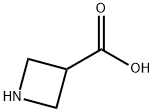
CAS No:36476-78-5
MF:C4H7NO2
Appearance:white or off-white crystalline powder
Specification:98.5%
UN number:-
Package:1/5/10/25kgs/drum
Supply Capacity:Tons
Synonyms:3-AZETIDINECARBOXYLIC ACID, 98+%;N-AZACYCLOPROPYLAMINO-3-CARBOXYLIC ACID;3-AZETIDINECARBOXYLIC ACID 98%;>Azetidine3-Carboxylicacid;Azetidine-3-carboxylic acid 96%;3-AZETIDINE-3-CARBOXYLIC ACID;azetidine-3-carboxylic
Product application:3-Azetidinecarboxylic acid,36476-78-5,Azetidine-3-carboxylic acid,3-Carboxyazetidine,Four-membered nitrogen heterocycle,Unnatural amino acid analog,Rigid molecular scaffold,S1P receptor modulator intermediate,Kinase inhibitor precursor,Medicinal chemistry building block,Pharmaceutical intermediate CAS 36476-78-5,High purity 3-azetidinecarboxylic acid,Custom peptide synthesis modifier,Antitumor API intermediate,CNS drug synthetic raw material,Agricultural chemical building block,Heterocyclic chemical reagent,CAS 36476-78-5 manufacturer China,3-Azetidinecarboxylic acid supplier,Suzhou Health Chemicals azetidine supplier,Bioactive compound synthesis precursor,3-Azetidinecarboxylic acid wholesale export
3-Azetidinecarboxylic acid (CAS: 36476-78-5, also known as Azetidine-3-carboxylic acid) serves as an essential rigid four-membered nitrogen-heterocyclic building block and unnatural cyclic amino acid derivative in modern medicinal chemistry and advanced chemical synthesis. Owing to its strained azetidine ring architecture and well-defined spatial rigidity, this compound is extensively employed as a bioisostere and conformational constraint tool to modulate pharmacokinetic profiles, enhance metabolic stability, and improve the solubility of bioactive molecules. It is widely used as a critical intermediate for synthesizing novel sphingosine-1-phosphate (S1P) receptor modulators, selective protein kinase inhibitors, targeted anticancer candidates, and central nervous system therapeutics. Moreover, it plays a prominent role in peptidomimetics for constructing enzyme-resistant peptide analogs and serves as a vital structural precursor for synthesizing specialty agrochemicals and plant hybridization agents.
Address:No. 338, Jingang Avenue, ZhangJiaGang City, Jiangsu Province, China. P.C.:215600Email:sales@healthchems.com
Tel:+86-512-58277800Fax:+86-512-58999904


