Your Location:Home > Products > Oleamidopropyl dimethylamine; Dimethylaminopropyl oleamide
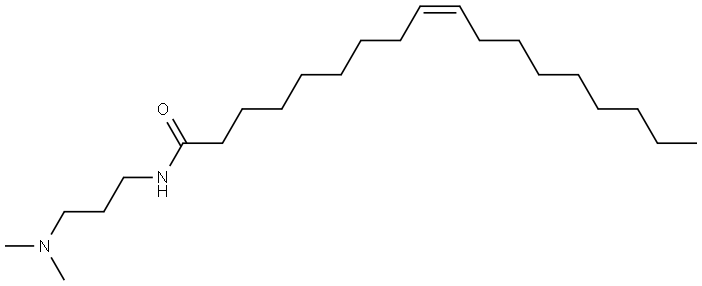
CAS No:109-28-4
MF:C23H46N2O
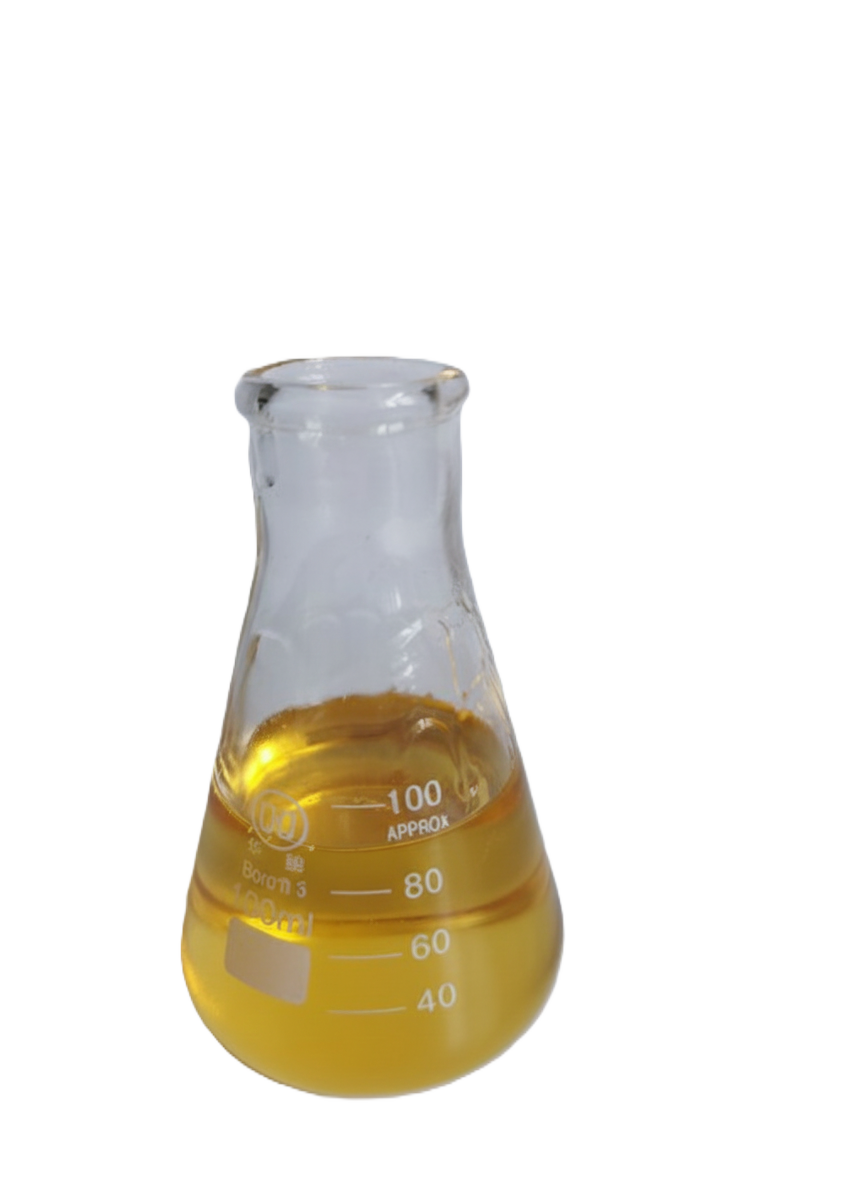
Appearance:yellow or dark-yellow transparent liquid
Specification:98.5%
Package:175kgs/barrel
Supply Capacity:Tons
Synonyms:(9Z)-N-[3-(Dimethylamino)propyl]-9-octadecenamide; 9-Octadecenamide, N-[3-(Dimethylamino)Propyl]-, (Z)-; Lexamine O 13; (E)-N-(3-Dimethylaminopropyl)Octadec-9-Enamide; N-[3-(dimethylamino)propyl]oleamide;OLEAMIDOPROPYL DIMETHYLAMINE;9-Octadecenamide, N-3-(dimethylamino)propyl-, (9Z)-;N-3-Oleylamidopropyl dimethylamine;N,N-Dimethylolamidopropylamine;(9Z)-N-[3-(Dimethylamino)propyl]-9-octadeceneamide;(Z)-N-[3-(Dimethylamino)propyl]-9-octadecenamide;OleylamidopropylDimethylAmine; N-(3-(Dimethylamino)propyl)oleamide,"109-28-4; Oleamidopropyl dimethylamine; N-[3-(Dimethylamino)propyl]oleamide; N-(3-(Dimethylamino)propyl)oleamide; 79K39JU7RN; Oleamide, N-(3-(dimethylamino)propyl)-; SCHERCODINE O; UNIZEEN OA; NSC-258347; MACKINE 501; SCHERCODINE O AMIDO-AMINE; DTXSID10873803; Oleamide, N-[3-(dimethylamino)propyl]-; DTXCID20912232; 203-661-5; Tegamine 0-13; (Z)-N-[3-(dimethylamino)propyl]octadec-9-enamide; 9-Octadecenamide, N-[3-(dimethylamino)propyl]-, (9Z)-; Oleic acid-N,N-dimethyltrimethylenediamine condensate; 9-Octadecenamide, N-(3-(dimethylamino)propyl)-, (Z)-; 9-Octadecenamide, N-(3-(dimethylamino)propyl)-, (9Z)-; Lexamine O 13; (3-(Oleoylamido)propyl)dimethylamine; Dimethylaminopropyl oleamide; UNII-79K39JU7RN; EINECS 203-661-5; Tegamine O 13; NSC 258347; SCHEMBL4622859; N-3-Oleylamidopropyl dimethylamine; oleoylaminopropyl-N,N-dimethylamine; NSC258347; Oleamide, N-[3-(dimethylamino)propyl]-); DB-223266; N-(3-(Dimethylamino)propyl)-9-octadecenamide; 9-Octadecenamide, N-(3-(dimethylamino)propyl)-; (9Z)-N-[3-(dimethylamino)propyl]-9-octadecenamide; OLEIC ACID 3-(N,N-DIMETHYLAMINO)PROPYLAMIDE; Q27266762; 9-Octadecenamide,N-[3-(dimethylamino)propyl]-,(9Z)-",366.600,C23H46N2O;
PKO-O is suitable for use in emollients, emulsifiers, foaming agents, foaming agents, conditioners, softeners, asphalt emulsifiers, paper waterproofing agents, corrosion inhibitors, petroleum product additives, and surfactants. It has broad applications in the daily chemical, personal care, cosmetics, and oilfield industries.
Surfactant Raw Material: PKO-O is an important intermediate in the preparation of cationic and amphoteric surfactants. By reacting with various acids or halogenated hydrocarbons, it can produce a range of surfactants with diverse properties and uses, widely used in detergents, cosmetics, textiles, leather, and other industries. For example, the reaction of PKO-O with dimethyl sulfate produces stearamidopropyl dimethylammonium chloride, a commonly used cationic surfactant with excellent antibacterial, softening, and antistatic properties.
Daily Chemical Industry: PKO-O can be used as an emollient, conditioner, lubricant, moisturizer, and emulsifier in the production of conditioners, skin care products, hair products, shampoos, and skin care products. PKO-O is commonly used in personal care products such as shampoos and body washes to provide foaming and cleansing properties. PKO-O can be used in the production of daily chemicals such as detergents and cleaners, providing cleaning properties and emulsion stability.
Plastics and Synthetic Fibers: PKO-O is used as an additive or modifier in the plastic injection molding and synthetic fiber production processes to improve the physical properties and processing performance of the products. In plastic and rubber processing, PKO-O is used as a lubricant additive to reduce friction between polymer molecules, enhance processing performance, and improve the surface finish of the product. It also enhances mold release and reduces mold wear.
Inks and Oilfields: PKO-O is used as an additive in ink manufacturing to improve ink dispersibility, stability, and adhesion. It is also used in oilfield drilling, mineral flotation, and pesticide emulsification. In oil extraction and refining, PKO-O can be used as a corrosion inhibitor, emulsifier, and demulsifier. It forms a protective film on metal surfaces, preventing corrosive media from attacking equipment. In crude oil emulsification and demulsification, it regulates the properties of the oil-water interface, helping to improve crude oil recovery and product quality. In oilfield acid fracturing, it can be formulated with brine and hydrochloric acid to form a new gelling acid system. This system leaves no residue on the surface of acid-etched caves, preventing secondary damage to the formation and ensuring environmental friendliness and cleanliness.
Other Applications: PKO-O can also be used as an ore concentrate, foaming agent, thickener, and raw material for the preparation of quaternary ammonium salt products. It also has applications in the coatings, papermaking, and textile industries. In coatings, PKO-O improves leveling and gloss. In the papermaking industry, PKO-O acts as a paper softener and water repellent, enhancing paper quality and performance. In the textile industry, PKO-O is used in textile pretreatment and dyeing and finishing processes. PKO-O is also used in metal grinding as a lubricant and rust inhibitor.
Address:No. 338, Jingang Avenue, ZhangJiaGang City, Jiangsu Province, China. P.C.:215600Email:sales@healthchems.com
Tel:+86-512-58277800Fax:+86-512-58999904


